
Case study · Agency years
Broadway.com
The best of Broadway, refined for touch.
Broadway.com tapped Fantasy Interactive (Fi) to build an iPad app that put the latest buzz, photos, videos and ticket-buying in one place. Chris Rubin wrote, edited and produced the case study, the first one built on the narrative structure he created for Fi shortly after arriving.
- Client
- Broadway.com
- Sector
- Entertainment, ticketing
- Work
- The Broadway.com iPad app: concept, strategy and UX, design, development
- Role
- Writer, editor and producer of the case study; author of Fi's case-study narrative structure
The brief
Take the best of Broadway.com, refine it for the iPad, and present an effortless touchscreen experience that puts the user in the driver's seat. A one-stop shop for buzz, information, pictures, and a seamless way to snag seats to any live performance.
What we built
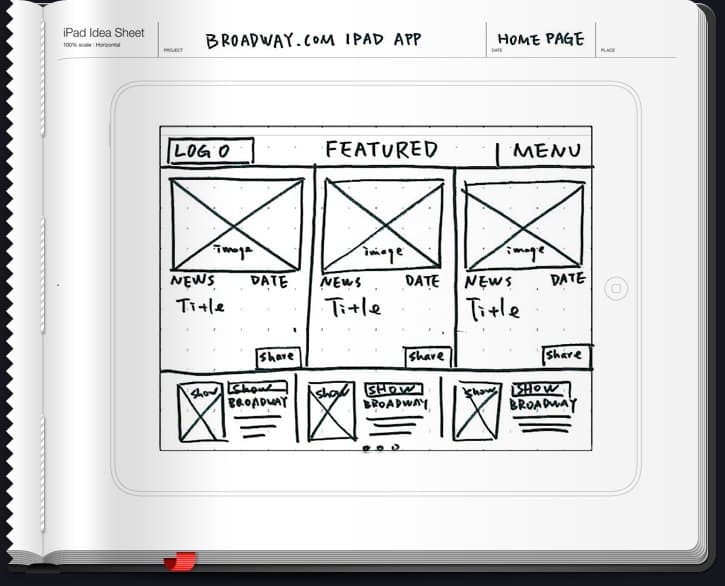
It started on paper, in Fi-branded Moleskines: landing, shows list, show detail, video gallery. The sketches ended up not far from the shipped app. Then a site map, wireframes and a consistent set of touch gestures, with content and commerce meshed rather than bolted together.
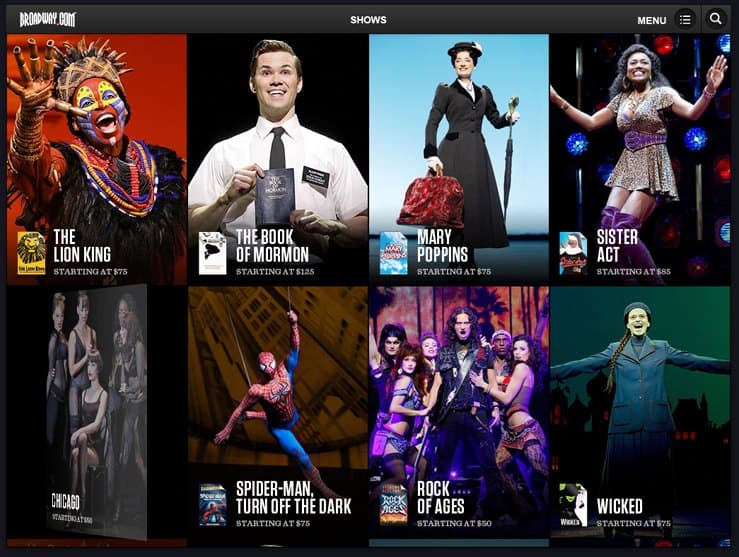
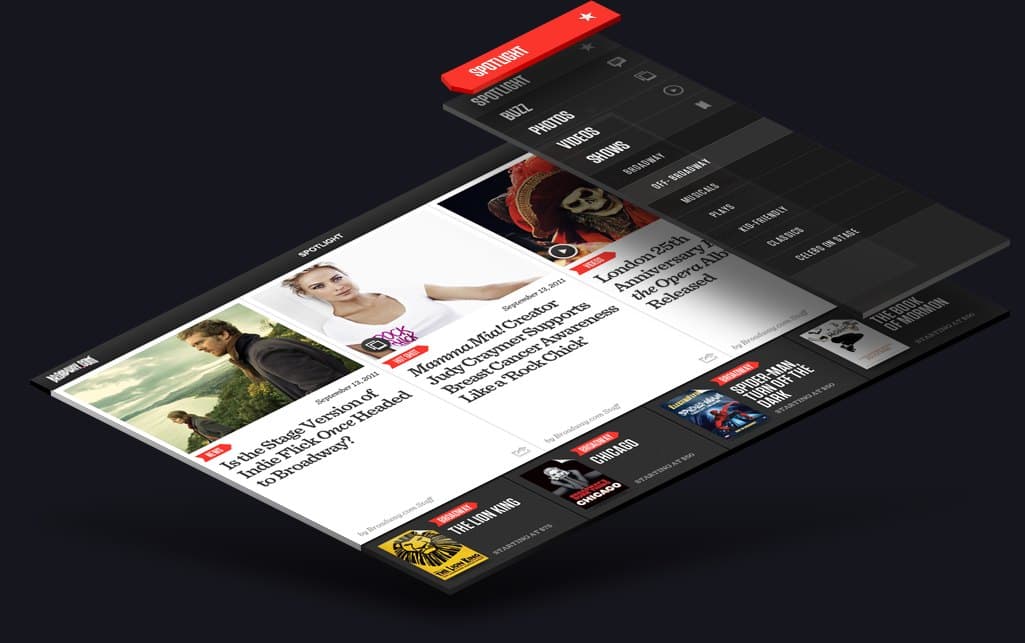
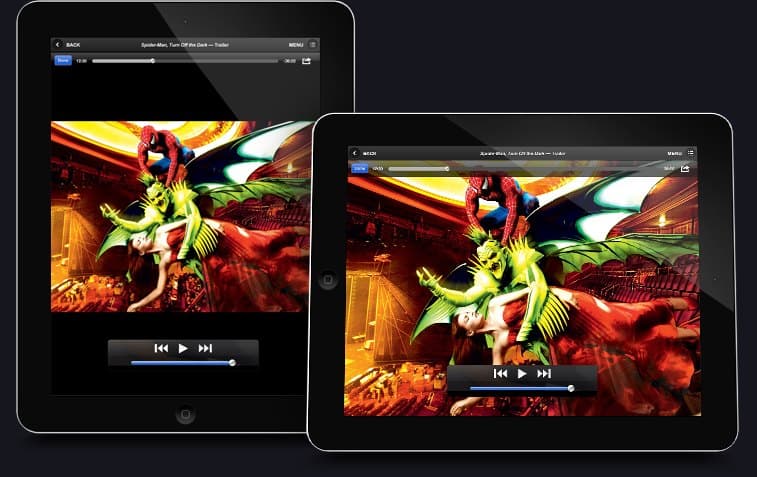
The design absorbed the Broadway.com brand and extended it: clean typography, gesture-driven navigation, a wall of iconic show imagery, tiles that flip to reveal details, and a menu that slides over content and gets out of the way. Portrait and landscape were both first-class, with smart grids and pre-loading so reading and watching felt comfortable either way. Native Objective-C on iOS 5, tied into Broadway.com's Django CMS.
This was the first case study conceived and produced in the narrative structure and flow I created for Fi. Compared with what came after, we were still finding our way, and it shows a little. It's also where the method started.
The app.
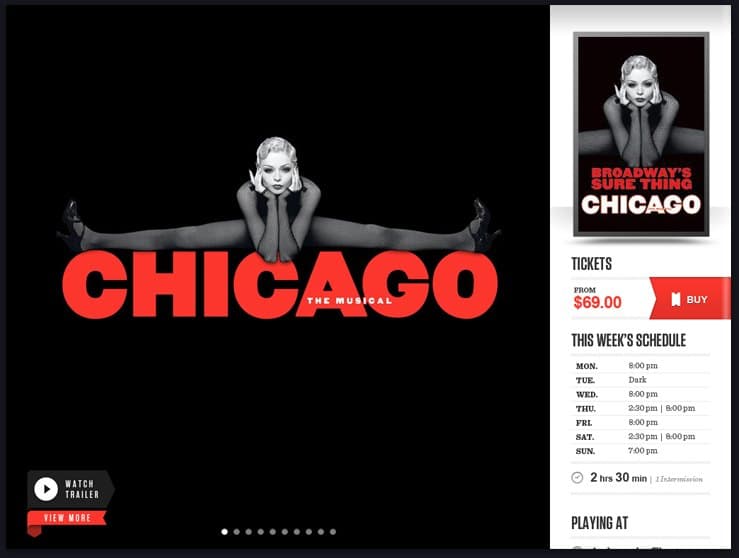
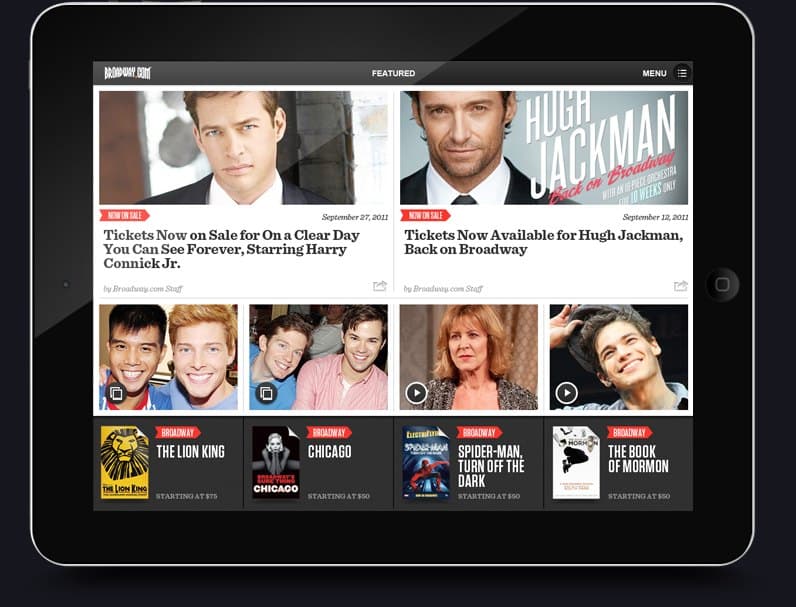
From the case study: the idea sheet, the shows grid, a show page, the featured news layer, and the app in both orientations.
Scroll →
What changed
A popular app, and a repeatable way for Fi to tell its own stories. The projects that followed—Madden, Ramayana, Re:Brief—were told the same way, with more confidence each time.
Is your best story still living in one head?
Book the Diagnostic