


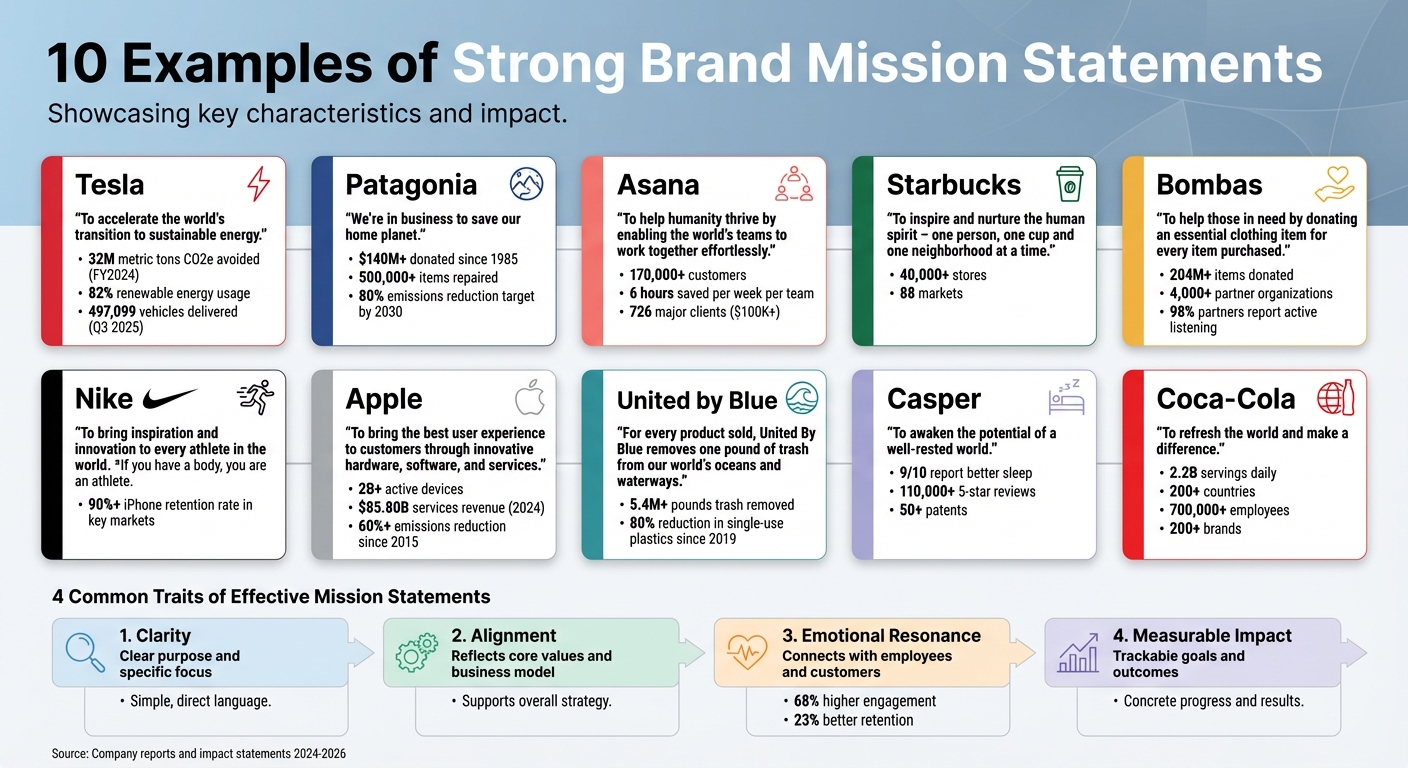
A great mission statement is clear, action-driven, and memorable. It defines a brand’s purpose, aligns with its values, and resonates emotionally with its audience. Companies with strong mission alignment often see faster growth, higher profits, and more engaged employees. This article highlights 10 standout examples from brands like Tesla, Patagonia, and Nike, showcasing how their mission statements drive impact and loyalty.
Key Takeaways:
- Tesla: "To accelerate the world’s transition to sustainable energy." Focuses on innovation and measurable environmental goals.
- Patagonia: "We’re in business to save our home planet." Centers on environmental responsibility and transparency.
- Asana: "To help humanity thrive by enabling the world’s teams to work together effortlessly." Addresses workplace productivity and collaboration.
- Starbucks: "To inspire and nurture the human spirit – one person, one cup, and one neighborhood at a time." Combines quality with community building.
- Bombas: "To help those in need by donating an essential clothing item for every item purchased." Pioneers a one-for-one giving model.
- Nike: "To bring inspiration and innovation to every athlete in the world." Redefines inclusivity in sports.
- Apple: "To bring the best user experience to customers through innovative hardware, software, and services." Prioritizes user-centric design and sustainability.
- United by Blue: "For every product sold, United By Blue removes one pound of trash from our world’s oceans and waterways." Links products to measurable environmental action.
- Casper: "To awaken the potential of a well-rested world." Focuses on improving sleep quality through thoughtful design.
- Coca-Cola: "To refresh the world and make a difference." Balances global reach with social impact.
Each mission statement shares four traits: clarity, alignment with values, emotional resonance, and measurable impact. These examples demonstrate how a well-crafted mission can inspire trust, drive growth, and foster loyalty.
10 Strong Brand Mission Statements: Key Traits and Examples
Crafting a Powerful Brand Mission Statement That Inspires!
sbb-itb-aebd855
1. Tesla: Accelerating Sustainable Energy Transition
Mission Statement: "To accelerate the world’s transition to sustainable energy." [4][5]
Clarity of Purpose
Tesla’s shift from focusing solely on "sustainable transport" to a broader vision of "sustainable energy" reflects its growth beyond electric vehicles into a full-scale energy ecosystem [4][6]. The use of the word "accelerate" highlights Tesla’s ambition to lower costs while staying ahead of competitors [5].
Alignment with Brand Values and Business Model
Tesla’s mission underpins its integrated approach, combining energy generation, battery storage, and electric vehicles into a unified strategy [4][5]. In Q3 2025, Tesla achieved a milestone by deploying 12.5 GWh of energy storage – an 81% increase compared to the previous year. Its Energy Generation and Storage division also generated $3.4 billion in revenue, marking a 44% rise year-over-year [5]. This segment is projected to contribute around $15 billion to Tesla’s expected $120 billion revenue in FY2025. These efforts highlight Tesla’s commitment to achieving both environmental and operational goals.
Measurable Impact
Tesla’s impact is evident in several key areas. In FY2024, its customers helped avoid 32 million metric tons of CO2e emissions. The company also reached 82% renewable energy usage across its global manufacturing sites and improved battery material recovery by 136% compared to 2023 [5][7]. Gigafactory Berlin achieved net water-neutral operations, and advancements in dry electrode manufacturing reduced energy intensity in battery production by 29% [5]. Additionally, Tesla delivered 497,099 vehicles in Q3 2025 and expanded its Supercharger network by 18% year-over-year, adding over 3,500 new stalls [5].
2. Patagonia: Balancing Product Quality with Environmental Action
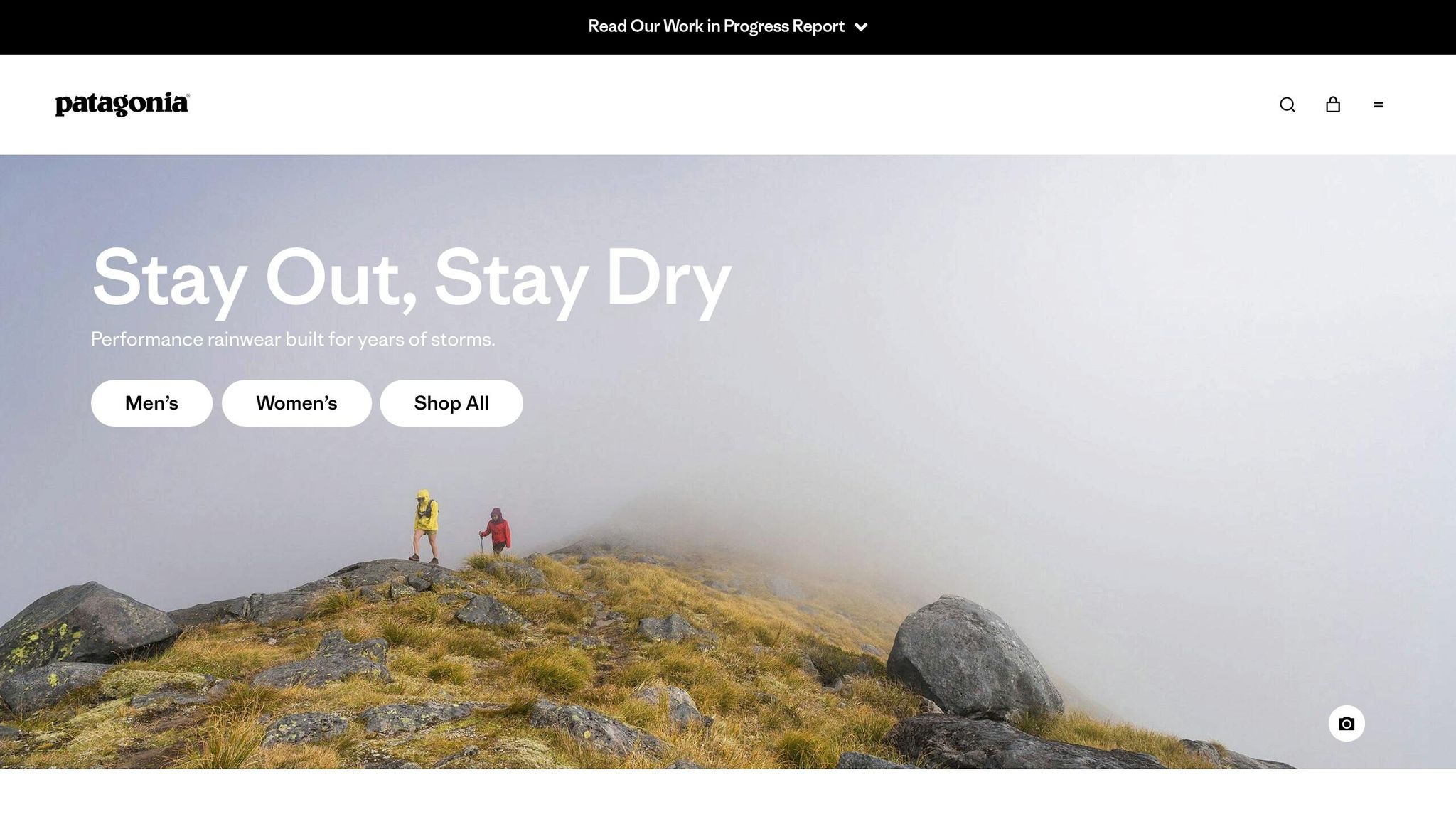
Mission Statement: "We’re in business to save our home planet." [9]
Clarity of Purpose
Patagonia’s mission statement leaves no room for doubt – it’s all about environmental preservation. This focused declaration, a shift from earlier versions, puts saving the planet at the center of its operations [9]. Vincent Stanley, Director of Philosophy at Patagonia, emphasizes this:
"We’re in business to save our home planet. That’s our stated mission. We want to inspire other businesses to address social and environmental challenges." [9]
Interestingly, the company has moved away from the word "sustainable", opting instead for "responsible." This change reflects an acknowledgment that all manufacturing has some environmental impact [9]. This transparency strengthens Patagonia’s environmental commitment.
Alignment with Brand Values and Business Model
In a bold move in September 2022, founder Yvon Chouinard restructured Patagonia’s ownership to ensure the company’s profits – around $100 million annually – are directed toward environmental protection [8][13].
For Patagonia, quality isn’t just about durability but also about environmental responsibility. Products are designed to be useful, versatile, long-lasting, repairable, and recyclable [12]. This philosophy fuels initiatives like Worn Wear, which has repaired over 500,000 clothing items, reducing landfill waste [11]. The "Ironclad Guarantee" further highlights this commitment to durability and customer trust. Clara Redwood, Global Repair Experience Manager, explains:
"The repair service really instills a sense of trust in the customer base. We back up the things that we make, and the items are of a quality that allows them to be repaired, which I think is huge." [11]
Emotional Resonance
In November 2011, Patagonia took a bold step with its New York Times ad, "Don’t Buy This Jacket." The ad highlighted the environmental toll of production, paradoxically driving sales while strengthening customer loyalty [9]. This approach struck a chord with consumers who value honesty and environmental responsibility.
Measurable Impact
Patagonia doesn’t just talk the talk – it sets measurable goals. The company has committed to reducing its absolute Scope 1 and 2 emissions by 80% and Scope 3 emissions by 55% by 2030, using 2017 as the baseline [10][13]. By 2040, the target is a 90% reduction in emissions across its value chain to achieve net-zero [10][13].
Since 1985, Patagonia has donated over $140 million to environmental causes through its "1% for the Planet" initiative, pledging 1% of total sales regardless of profitability [11]. By 2024, more than 90% of its product line will be Fair Trade Certified, benefiting over 85,000 workers [11]. Additionally, Patagonia transitioned its entire sportswear line to 100% organic cotton in 1996 after uncovering the environmental harm caused by conventional cotton farming [9][11].
3. Asana: Enabling Team Collaboration
Mission Statement: "To help humanity thrive by enabling the world’s teams to work together effortlessly." [14][15][16]
Clarity of Purpose
Asana’s mission statement gets straight to the point: it highlights who they aim to help (the world’s teams), what they aim to achieve (effortless collaboration), and why they do it (to help humanity thrive) [16]. The company focuses on tackling a specific problem they call "work about work" – the endless cycle of managing tasks via emails, chats, and meetings [14][15]. Co-founders Dustin Moskovitz and Justin Rosenstein summed it up perfectly:
"We love working on big ideas, but we loathe the annoying busywork required by their execution." [14]
Their vision is to create a "living system of clarity", where teams can prioritize, communicate, and act seamlessly, no matter where they are [14]. For Asana, collaboration isn’t just a tool – it’s a driver for meaningful progress. This focus on clarity shapes every decision they make.
Alignment with Brand Values and Business Model
Asana’s mission isn’t just a statement – it’s embedded in how they operate. The company views revenue as "rocket fuel" to power its mission, not the ultimate goal [14]. With a hybrid sales model, Asana reaches teams of all sizes across 190 countries [14]. At its core is the "Work Graph", a technical framework that connects people, tasks, and goals, making collaboration smoother and more intuitive [14]. Their emphasis on mindfulness and clarity is reflected in the product’s design, which simplifies coordination and reduces chaos.
By fiscal year 2025, Asana has grown to serve over 170,000 customers worldwide, including 726 major clients spending $100,000 or more annually – a 20% increase from the previous year [18].
Emotional Resonance
Asana also addresses a deeper issue: the stress and anxiety caused by unclear priorities and constant task juggling [14]. Teams using features like Goals and Automation report saving an average of 6 hours each week [17]. Jorge Elorza, Mayor of Providence, summed up the impact well:
"When people call City Hall, they might have a small issue… but to that constituent it’s very important. So it’s important that nothing slips through the cracks. That’s exactly what Asana helps us do." [15]
This emotional connection – reducing stress while improving productivity – makes Asana more than just a tool; it becomes a trusted partner in achieving meaningful work.
4. Starbucks: Human Connection and Community Impact
Mission Statement: "To be the premier purveyor of the finest coffee in the world, inspiring and nurturing the human spirit – one person, one cup and one neighborhood at a time." [19]
Clarity of Purpose
Starbucks has redefined its focus, shifting from simply selling coffee to fostering meaningful human connections. Phrases like "nurturing the human spirit" ensure the mission remains relevant, even as the company’s offerings evolve [19]. The statement "one person, one cup and one neighborhood at a time" takes what could feel like an overwhelming global presence – spanning over 40,000 stores in 88 markets – and makes it feel personal and achievable [19].
The mission also highlights a dual focus: maintaining high-quality coffee while acting as a unifying force in communities. This blend of priorities positions Starbucks as more than just a coffee company – it’s a place where people come together.
Alignment with Brand Values and Business Model
Starbucks lives its mission by fostering a culture of warmth and inclusivity. Its stores are designed to be welcoming "third places", offering more than just coffee – a space where people can connect. Personalized service from baristas reinforces this sense of human connection [19]. In 2023, Starbucks expanded its mission-driven approach by introducing six specific promises, addressing key stakeholders: partners, customers, farmers, communities, the environment, and shareholders. Among these is a Community Promise, pledging to positively impact every neighborhood Starbucks enters [19].
As Chairman and CEO Brian Niccol put it:
"When the barista hands the customer their cup of coffee, it is this moment of connection that doesn’t happen in any other moment in the day… The humanity of that moment is really powerful." [19]
This focus on creating personal, meaningful interactions strengthens emotional ties with customers.
Emotional Resonance
Starbucks’ practices bring its mission to life by building genuine human connections. Core values like "Belonging" and "Joy" reflect a commitment to dignity, care, and celebration [20]. Baristas are more than employees – they act as facilitators of memorable moments. This emotional approach became a cornerstone of Starbucks’ strategy in 2008, when 10,000 store managers gathered in New Orleans for a pivotal event that marked the company’s shift from a product-first mindset to one centered on human connection [19].
5. Bombas: Purpose-Driven Commerce Through One-for-One Model
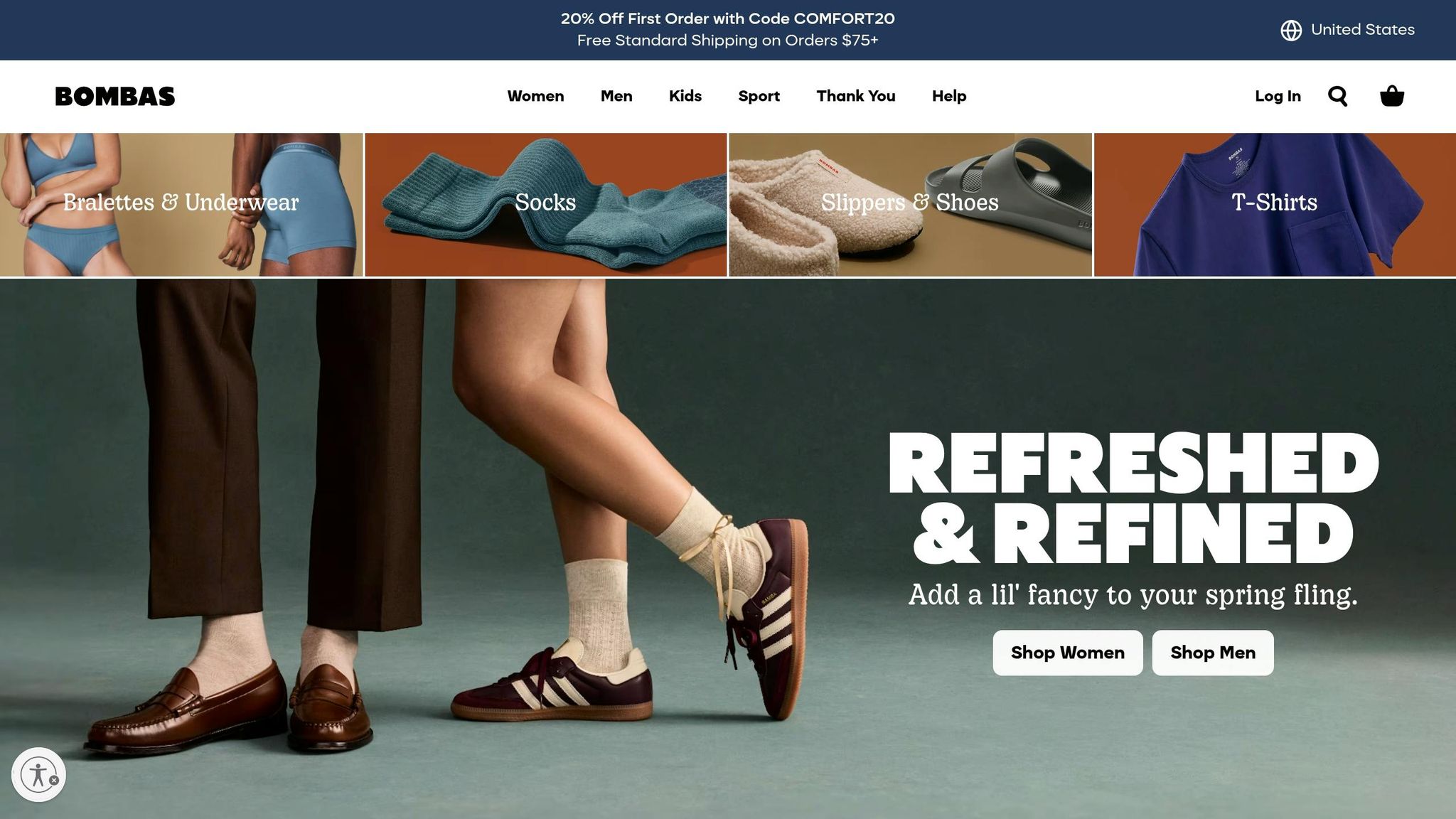
Mission Statement: "To help those in need by donating an essential clothing item for every item purchased." [21][22]
Clarity of Purpose
Bombas has built its mission around a simple yet powerful insight: socks are the most requested item at homeless shelters, but they’re rarely donated because of hygiene concerns [21][23]. To address this, Bombas ensures that every purchase results in a donation of an essential clothing item.
Their "One Purchased = One Donated" model is easy to grasp and deeply impactful. Co-founder Randy Goldberg shared the origin of this idea, saying:
"We didn’t think there was a business idea at first. We just thought, How can we solve this problem in our community?" [25]
This straightforward purpose is woven into both the product design and the company’s broader commitment to community support.
Alignment with Brand Values and Business Model
Bombas doesn’t just donate leftover inventory or generic items – they design donation-specific products with features tailored to the needs of people experiencing homelessness. These items include antimicrobial treatments for hygiene, reinforced seams for durability, and dark colors to hide wear and tear [21]. These thoughtful design details show a deep understanding of the challenges faced by those without regular access to laundry facilities.
Even the name "Bombas", derived from the Latin word for bumblebee, reflects the company’s ethos. It symbolizes a hive mentality where customers and the brand work together for a shared purpose [21][24]. This collective spirit is embodied in their motto, "Bee Better", which is stitched into every garment as a reminder of the mission.
Measurable or Tangible Impact
As of February 28, 2026, Bombas has donated over 204 million items through partnerships with more than 4,000 Giving Partner Organizations across all 50 states and internationally [21][22]. Of these, nearly 168 million items have already reached those in need [21].
The impact goes beyond the numbers. About 98% of Bombas’ giving partners report that the company actively listens to their community’s needs, and 79% say the donations allow them to allocate more resources to other critical services like food and housing [21]. When Bombas hit its 100 millionth donation in 2023 – a milestone they initially thought would take a decade – they launched a citywide campaign in New York with over 300 media placements to raise awareness about homelessness [21][22].
Emotional Resonance
Beyond the statistics, Bombas creates a personal connection with its customers and partners, framing each purchase as a direct act of change. The messaging, "You make a purchase, you spark a donation", emphasizes the meaningful impact of every transaction [21]. Chief Marketing Officer Kate Huyett explained this balance perfectly:
"Our very best marketing, from both a creative and performance standpoint, is where we are truly able to marry both mission and product." [24]
This emotional connection is also felt by donation recipients. Charles, one recipient, expressed the significance of the support:
"Offering someone something they really need is an important step toward more than you could imagine." [21]
Bombas’ approach combines measurable results with emotional storytelling, creating a brand that resonates on multiple levels.
6. Nike: Inclusivity and Athletic Inspiration
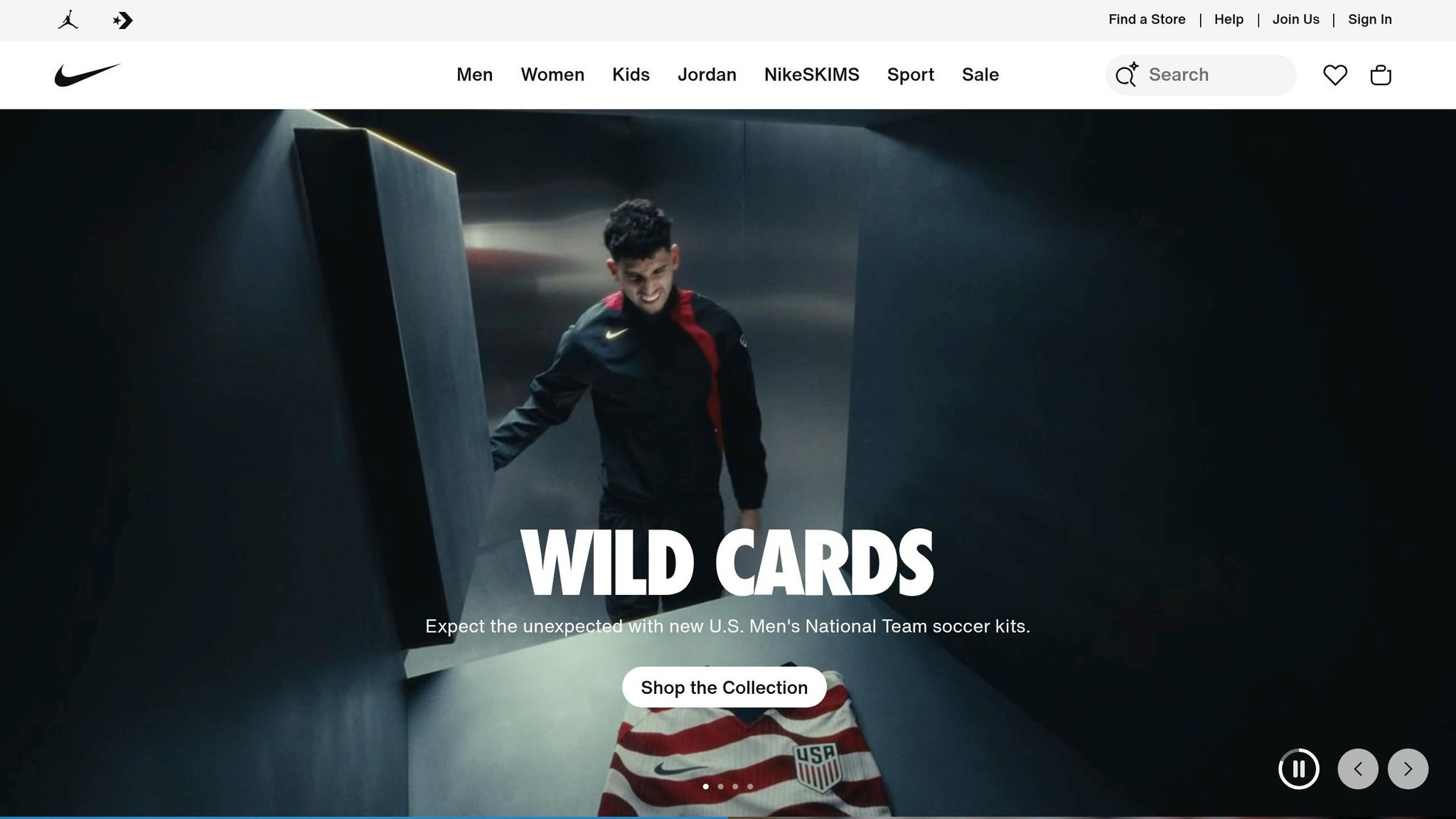
Mission Statement: "To bring inspiration and innovation to every athlete* in the world. *If you have a body, you are an athlete." [26][28]
Clarity of Purpose
Nike’s mission takes a bold stance with its asterisk, redefining "athlete" to mean everyone. By stating that anyone with a body is an athlete, Nike shifts its focus from solely catering to elite competitors to embracing people from all walks of life [26][28]. This inclusive perspective has been a driving force behind Nike’s decisions for over five decades [26].
The mission is both emotionally uplifting and practically grounded. It’s not just about making people feel included – it’s about designing products and initiatives that genuinely help individuals move better, no matter their starting point or fitness level.
Alignment with Brand Values and Business Model
Nike brings its mission to life through four core pillars: Diversity, Equity & Inclusion; Youth Sport; Sustainability; and Responsible Supply Chain [26]. The company’s Diversity, Equity & Inclusion framework translates into actionable goals, such as building a workforce that mirrors the marketplace, creating equitable experiences, fostering a sense of belonging, and ensuring accessibility for athletes and employees with disabilities [27].
A standout example of this mission in action is the Nike Sport Research Lab (NSRL), which offers "Baseline Testing" to help athletes of all levels understand their physical potential – not just professionals [29]. Nike also supports Indigenous youth through its N7 Fund, providing grants to nonprofits in North America to empower young people through sports [29]. Additionally, in March 2026, Nike launched the Blue Ribbon Elite NIL Program, partnering with 16 leading University of Texas athletes to support the next generation of collegiate athletes [29]. These efforts reflect Nike’s commitment to making sports accessible and meaningful for everyone.
Emotional Resonance
The redefinition of "athlete" creates a profound emotional connection by validating everyone’s potential to participate in sports. Nike’s outreach spans kids, professional athletes, dreamers, and everyone in between, fostering a sense of belonging across diverse groups [29]. From championing trailblazers like Joan Benoit Samuelson to breaking barriers in sports, Nike’s history underscores its dedication to inclusivity [26].
Nike’s leadership reinforces this emotional connection:
"Every audacious moonshot to create more sustainable products and every step forward in building a responsible supply chain is rooted in our conviction that a better future lies on the other side of serving athletes* as only NIKE can." [26]
This philosophy goes beyond selling products. It positions every interaction with Nike – whether buying a pair of shoes or engaging in their programs – as part of a larger movement to redefine who gets to participate in sports and how they do it.
7. Apple: User Experience Through Innovation
Mission Statement: "To bring the best user experience to customers through innovative hardware, software, and services." [30][33]
Clarity of Purpose
Apple’s mission revolves around delivering the best user experience by seamlessly integrating hardware, software, and services [30][33]. Steve Jobs famously explained this approach:
"You’ve got to start with Customer Experience and work back toward the technology, not the other way around." [34]
This philosophy guides Apple’s development process. Instead of creating technology and then searching for its purpose, Apple begins by understanding user needs and then designs technology to fulfill them.
Alignment with Brand Values and Business Model
Apple’s ecosystem is designed to work harmoniously. Features like Handoff and Universal Clipboard allow users to switch effortlessly between devices, enhancing productivity and convenience [34].
Beyond its products, Apple reflects its values through socially responsible initiatives. For example, in 2024, the company monitored the working hours of 1.4 million supplier employees weekly to uphold labor standards. Additionally, over 2.5 million supplier employees received rights training that same year [34]. Through its Community Education Initiative, Apple provided nearly 2,000 schools with hardware and scholarships over five years, benefiting 500,000 students across 100 countries by 2024 [34]. These actions demonstrate Apple’s commitment to empowering communities, not just through technology but also through broader societal contributions [32].
Emotional Resonance
Apple’s focus on human-centered design – prioritizing ease of use over technical jargon – creates products that deeply connect with users. This approach has led to remarkable customer loyalty. For instance, the iPhone boasts a retention rate exceeding 90% in key markets, while Apple enjoys a Net Promoter Score of 72 [34]. Tim Cook emphasizes this vision:
"We believe that business, at its best, serves the public good, empowers people around the world, and binds us together as never before." [34]
Examples like the Apple Watch’s ECG feature, which monitors heart health, and accessibility tools like VoiceOver highlight how Apple’s innovations enhance lives in meaningful ways [34].
Measurable or Tangible Impact
Apple has made significant strides in environmental sustainability. Since 2015, the company has reduced greenhouse gas emissions by over 60% and is on track to achieve full carbon neutrality by 2030. Its suppliers have also adopted nearly 18 gigawatts of renewable energy [34][31]. By 2024, Apple’s initiatives had conserved over 14 billion gallons of freshwater and diverted 3.6 million metric tons of supplier waste from landfills [34].
The financial results speak volumes, too. In 2024, Apple’s services revenue hit a record $85.80 billion. With over 2 billion active devices worldwide and a market cap of $2.29 trillion as of March 2023, Apple’s relentless focus on user experience drives both loyalty and substantial business growth [34].
8. United by Blue: Measurable Environmental Action
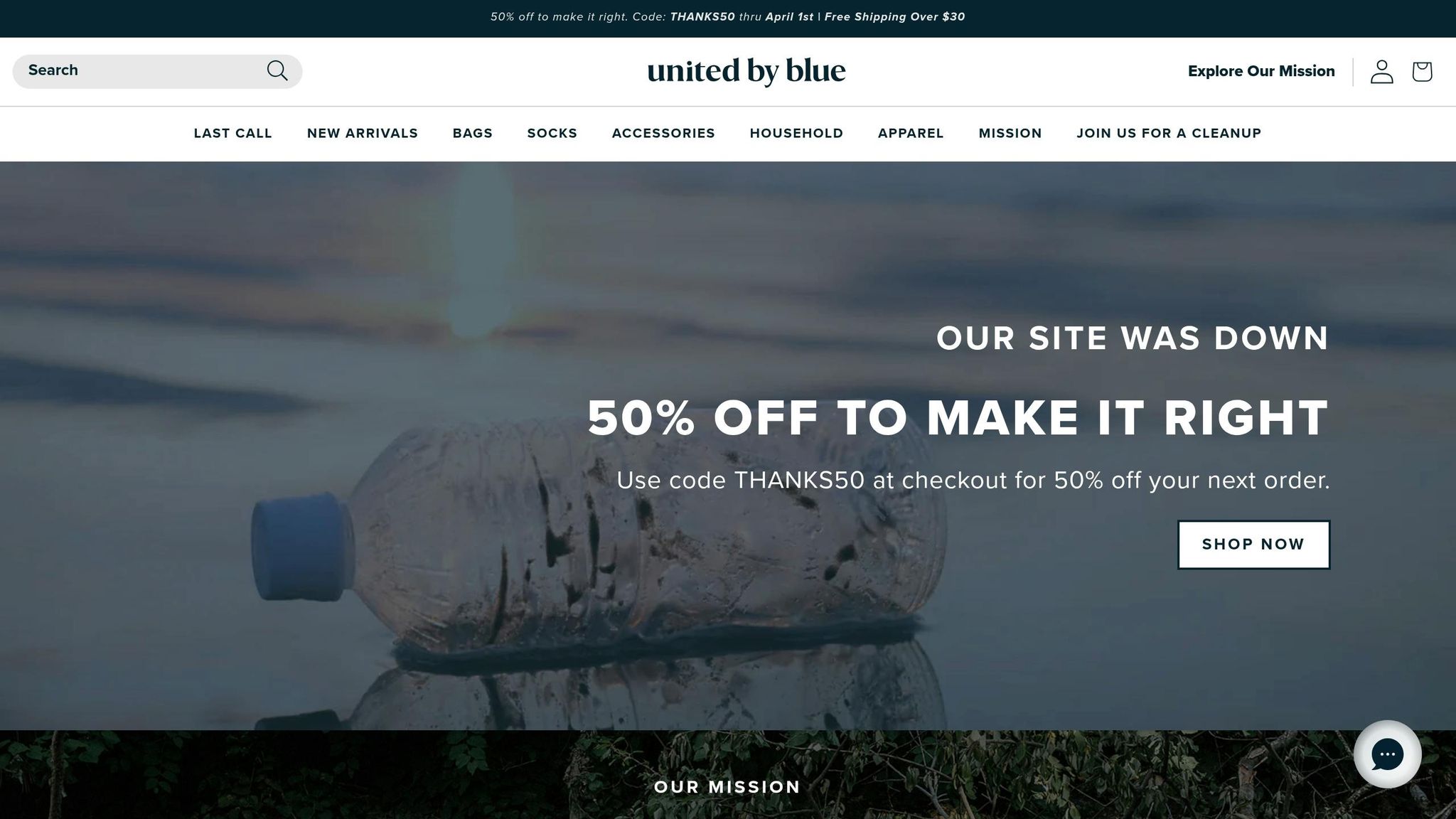
Mission Statement: "For every product sold, United By Blue removes one pound of trash from our world’s oceans and waterways." [36]
Clarity of Purpose
United by Blue has a mission that’s easy to grasp: for every product sold, they remove one pound of trash from the environment. This simple 1-for-1 model leaves no room for doubt about their dedication. As the brand explains:
"The world is on track to have more plastic in the ocean than fish by 2050 – so we’re doing something about it." [36]
This statement underscores their urgency and commitment, forming the backbone of their business practices.
Alignment with Brand Values and Business Model
United by Blue weaves its mission into every aspect of its operations. As a Certified B Corp since 2011, the company undergoes rigorous third-party audits to ensure its environmental claims hold up [35]. They also follow a slow fashion approach, using materials like bison wool, organic cotton, and recycled polyester to reduce waste. Their efforts are measurable: in 2021, their B Corp impact score rose to 84.4, up from 80.1 in 2017 [38]. This alignment between values and actions results in real-world environmental benefits.
Measurable or Tangible Impact
The brand’s mission has led to impressive achievements. By early 2026, United by Blue had removed 5,410,975 pounds of trash from waterways [37]. In 2021 alone, they kept over 700,000 pounds of debris out of the ocean [38]. Their cleanup efforts span four types: Community, DIY, High Yield (targeting over 50,000 pounds per event), and International [36]. For instance, in July 2024, 110 volunteers participated in a Boulder Creek cleanup, removing 545 pounds of trash in a single day [39]. Additionally, the company has drastically reduced its reliance on single-use plastics, cutting them by 80% since 2019. This initiative saved over 177,000 poly bags during a single product launch with Target [40].
9. Casper: Wordplay and Sleep-Focused Purpose
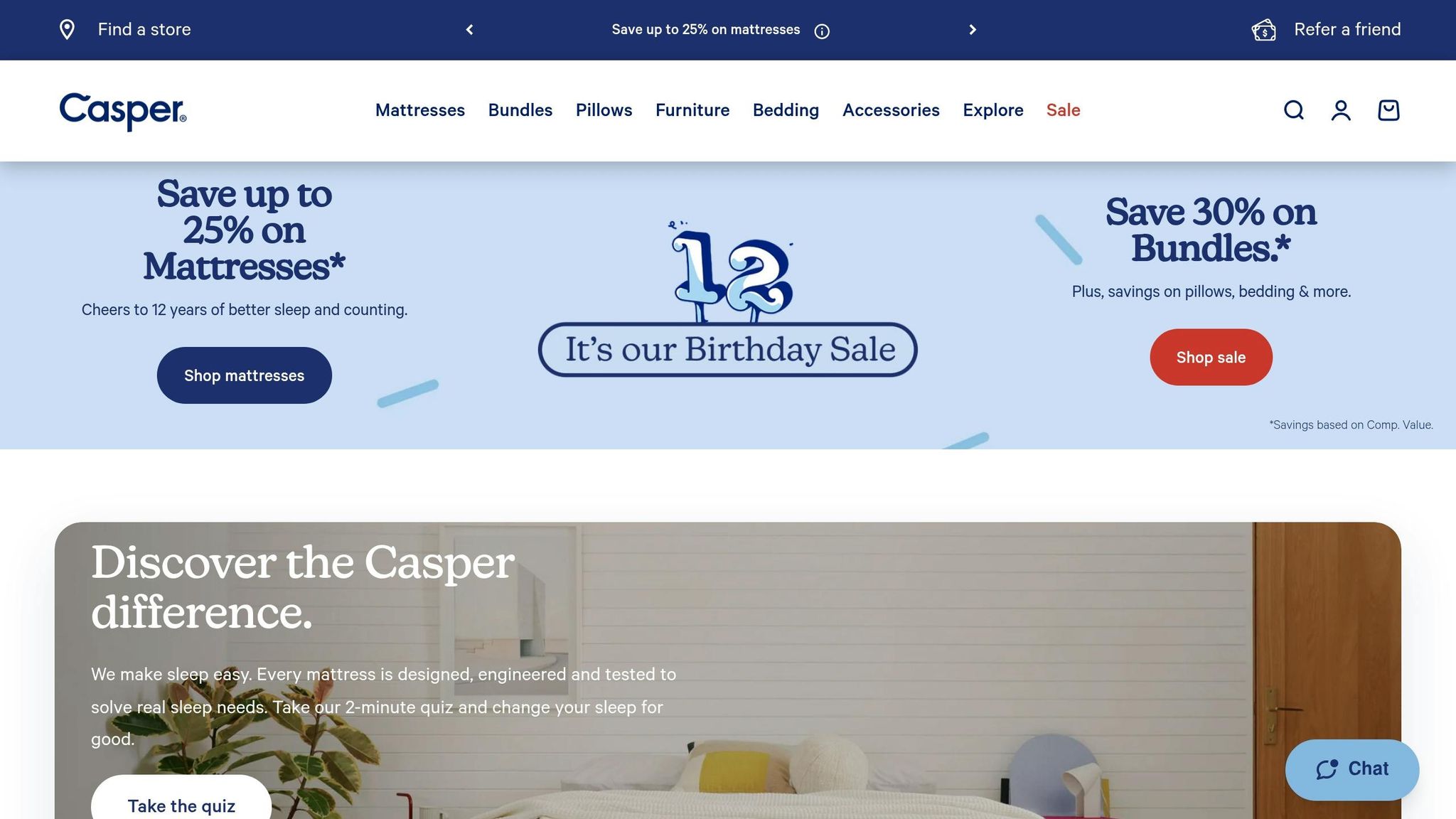
Mission Statement: "To awaken the potential of a well-rested world." [41][46]
Clarity of Purpose
Casper’s mission cleverly uses the word "awaken", tying directly to the concept of sleep while hinting at renewed energy and well-being. As Cecilia Gillen from Zapier explains:
"The brand could have chosen a generic action verb, but instead, it chose one related to its industry and brand for a greater impact." [46]
This approach shifts the focus from simply selling mattresses to emphasizing the broader benefits of better sleep – enhanced daily performance, quicker recovery, and improved long-term health [41].
Alignment with Brand Values and Business Model
Casper’s dedication to its mission is evident through its innovations at Casper Labs. With over 50 patents in foam and ergonomic support, the company prioritizes designs that are rigorously tested and laser-focused on improving sleep [41][44]. Their guiding principle states:
"Everything we design must be tested and must help sleep." [42]
Casper’s product range extends beyond mattresses, creating a full sleep ecosystem. This includes cooling technologies like Snow Technology, glow-lights, and ergonomically designed pillows [41][43]. Products such as the Dream Max and Snow Max mattresses, both endorsed by the American Chiropractic Association, highlight Casper’s dedication to sleep-centric innovation [42].
But it’s not just about technical advancements. Casper’s messaging also builds a strong emotional connection with its audience.
Emotional Resonance
Casper weaves playful, sleep-related language into its branding to forge a deeper bond with customers. Phrases like "Your cart is catching some ZZZs" and "Dreams do come true" make the experience feel personal and relatable [45]. By using inclusive language like "you" and "your", the brand creates a sense of understanding and care. This approach resonates with customers: 9 out of 10 report better sleep quality, and 4 out of 5 would recommend Casper to others [42].
Measurable or Tangible Impact
Casper’s mission has delivered tangible results, earning industry accolades and customer trust. In 2025, Consumer Reports rated "The One" as the best all-foam mattress and "Snow" as the top innerspring mattress [44]. The company has also received over 110,000 5-star reviews [42]. Looking ahead, Casper is aiming to make its operations more sustainable, with goals like achieving 90% recyclable components and carbon neutrality by 2030 [41].
10. Coca-Cola: Simplicity and Universal Aspiration
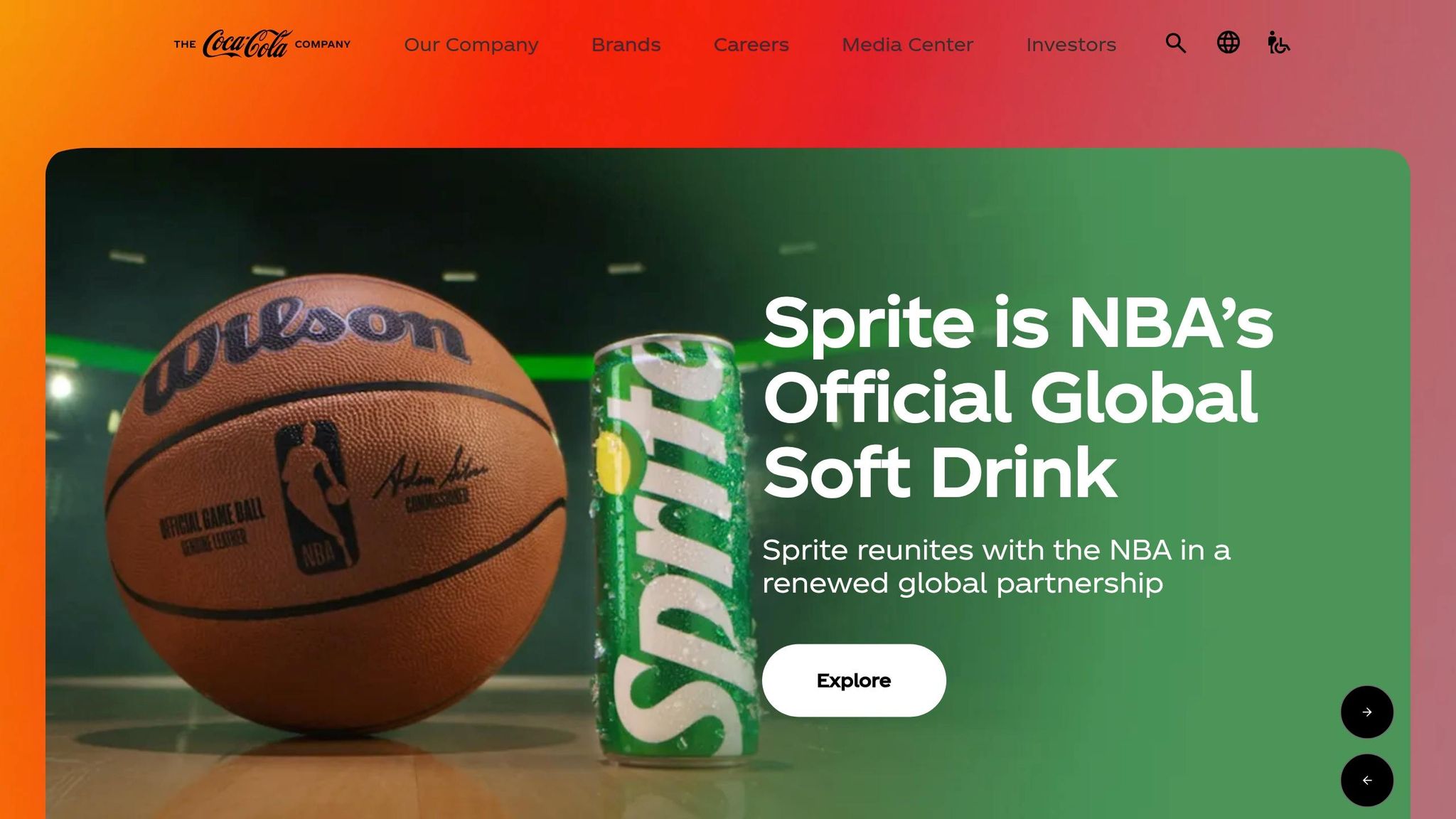
Mission Statement: "To refresh the world and make a difference." [50]
Clarity of Purpose
Coca-Cola’s mission is a masterclass in keeping things simple yet meaningful. With just seven words – "To refresh the world and make a difference" – it captures a vision that spans over 200 countries. The word "refresh" doesn’t just refer to quenching thirst; it also conveys a sense of emotional rejuvenation. As Chairman and CEO James Quincey puts it:
"Purpose sits at the heart of The Coca‑Cola Company’s business strategy." [48]
This streamlined focus allows Coca-Cola to connect with audiences across diverse cultures and markets.
Alignment with Brand Values and Business Model
The mission reflects Coca-Cola’s dual focus on operations and values. "Refresh the world" highlights its extensive distribution system, which delivers more than 2.2 billion servings daily through a network of 200+ bottling partners and 950 production facilities globally [47]. On the other hand, "make a difference" ties directly to its sustainability efforts, including water replenishment initiatives, recycling programs, and carbon footprint reduction [47][50].
Coca-Cola’s evolution from a single product to a portfolio of over 200 brands further demonstrates how its mission adapts to changing consumer needs. This alignment between its mission and operations not only drives revenue but also strengthens the emotional bond with its customers.
Emotional Resonance
The mission strikes a chord by blending optimism with practicality. It promises to revitalize both the body and the spirit, resonating with consumers’ desires for positivity and meaningful impact [48][49]. By emphasizing a "better shared future", Coca-Cola appeals to modern consumers who increasingly favor brands with a clear sense of purpose [47][48].
Measurable Impact
Coca-Cola ensures its mission is more than just words by backing it with measurable actions. Its global operations employ over 700,000 people, creating economic opportunities in communities around the world [47]. The company also tracks its progress on sustainability and operational goals, demonstrating how its mission translates into tangible outcomes. This approach not only reinforces its brand purpose but also delivers visible results on a global scale.
What Makes a Mission Statement Work
Looking at the examples mentioned earlier, four key traits stand out as the backbone of any effective mission statement. These traits help transform what could be seen as corporate jargon into a meaningful, strategic tool.
Clarity is where it all begins. A mission statement should clearly explain the purpose of a business – its reason for existing [51]. The best ones pass what’s called the "t-shirt test": they’re short and memorable enough that employees can recall them easily and even wear them with pride [1]. If your mission statement could just as easily fit on a competitor’s website, it’s missing the specificity needed to define what makes your business unique [52][1].
Alignment with core values is what separates a genuine mission from empty marketing language [53]. A mission that reflects a company’s true values creates consistency in decision-making and operations [53]. There’s evidence to back this up – companies with strong mission alignment see better profitability and higher employee retention. In fact, employees are 23% more likely to stay with a company for over three years when its actions consistently reflect its values [54].
Emotional resonance is what makes a mission statement truly impactful. When employees find their organization’s mission meaningful, their engagement levels soar to 68%, which is 52% higher than those who don’t feel connected to their company’s purpose [3]. Erica Olsen, Co-Founder of OnStrategy, captures this idea perfectly:
"A great mission statement. When every single staff member wakes up in the morning and knows that their purpose and the reason they come to work every day is expressed in your mission statement" [1].
This emotional connection turns routine tasks into meaningful contributions.
Measurable impact ensures that a mission statement doesn’t just inspire but also drives action. The most effective ones use clear, specific language that helps teams understand not only the "why" but also the "who" they’re working for [1]. By incorporating measurable goals, companies can track progress and use their mission as a guiding business tool [2].
These four traits – clarity, alignment with values, emotional resonance, and measurable impact – create a roadmap for brand building by crafting a mission statement that motivates, unites, and delivers results.
Conclusion
A well-crafted mission statement does more than describe your business – it builds trust by clearly expressing your core values. When your actions align with those values, customers are more likely to stick with you for the long haul [1]. This consistency transforms occasional buyers into loyal advocates, creating a strong foundation for your brand’s success.
An aligned mission can also lead to better revenue growth and profitability [3]. Plus, when your team is engaged and connected to the mission, they’re more likely to deliver outstanding customer experiences, which strengthens loyalty even further.
To create a mission statement that resonates, involve people across your organization and use straightforward, specific language that passes the "T-Shirt Test" [1][3]. Focus on three key elements: who you serve, the benefit you provide, and how you deliver it [1].
Keep in mind, a mission statement isn’t permanent. Most will need an update every 10 to 15 years, or sooner if your business undergoes significant changes like a rebrand, a shift in your target audience, or major adjustments to your goals [1].
Looking at the examples shared earlier, it’s evident that clarity, honesty, and a sense of purpose leave a lasting impression. Whether you’re a new business finding your footing or an established company fine-tuning your direction, dedicating time to a thoughtful mission statement can build trust, deepen loyalty, and support long-term growth. Use these insights to shape a mission that truly reflects your business and inspires confidence in your audience.
FAQs
What’s the difference between a mission statement and a vision statement?
A mission statement defines what an organization does today – it’s all about its current purpose. It explains what the organization does, who it serves, and how it achieves its goals. Think of it as a guide for day-to-day actions.
On the other hand, a vision statement looks ahead. It paints a picture of the organization’s future, describing its long-term goals and the impact it wants to make. In short, the mission focuses on the present, while the vision is all about where the organization is heading.
How can I tell if a mission statement is too generic?
A mission statement can lose its impact when it relies on vague phrases like "commitment to excellence" or "delivering value." These generic terms fail to provide clarity about what the company actually does, who its audience is, or why its work is meaningful. Without this specificity, the statement becomes forgettable and does little to set the brand apart.
How do you measure whether a mission statement is working?
An effective mission statement needs to be straightforward, actionable, and closely tied to your organization’s objectives. It should motivate action while also making it possible to measure progress over time. Key signs of success include its ability to steer decisions, connect with stakeholders, and help achieve specific, measurable goals.







No comment yet, add your voice below!