Unveiling the Power of Personal Branding: A Roadmap to Success

Unveiling the Power of Personal Branding

In the vast digital landscape of today’s world, personal branding has emerged as a formidable tool that transcends traditional self-promotion. It’s more than just a catchy tagline or a curated social media profile; it’s a strategic endeavor that shapes how individuals are perceived and remembered. This article delves into the depths of personal branding, drawing insights from the realm of experts. Moreover, we’ll explore the invaluable role that top branding agencies play in crafting impactful personal brands.

The Essence of Personal Branding

At its core, personal branding is the art of crafting a distinct identity and reputation for oneself. It involves identifying and showcasing one’s unique skills, values, passions, and expertise to resonate with a target audience. Just as businesses build brand identities, individuals can cultivate personal brands that leave a lasting impression, and open doors to opportunities.

Components of a Resonant Personal Brand

Brand Strategy Consulting

1. Authenticity and Consistency: The foundation of a strong personal brand lies in authenticity. It’s about being true to oneself and presenting a consistent image across various platforms. Authenticity builds trust, and fosters genuine connections with the audience.

2. Clarity and Focus: A well-defined personal brand has a clear focus on the individual’s strengths and expertise. It’s essential to identify one’s niche, and showcase a specific area of competence to stand out in a crowded digital landscape.

3. Value Proposition: Just like businesses have value propositions, personal brands should communicate the unique value individuals bring to the table. This value proposition sets the individual apart and answers the question, “Why should someone pay attention to me?”

4. Storytelling and Engagement: Storytelling is a powerful tool in personal branding. Sharing personal anecdotes, experiences, and successes humanizes the brand and engages the audience on a deeper level.

Leveraging Personal Branding for Success

Leveraging Personal Branding for Success

1. Online Presence and Content: In the digital age, personal branding largely takes place online. A strong online presence— including a professional website and active social media profiles—is essential. Consistent, high-quality content reinforces the personal brand and showcases expertise.

2. Networking and Relationship Building: Personal branding is not just about self-promotion; it’s also about building meaningful connections. Engaging with peers, mentors, and industry professionals can expand one’s reach and provide valuable opportunities.

3. Thought Leadership and Authority: Establishing oneself as a thought leader in a specific field enhances the personal brand’s credibility. Sharing insights, expertise, and opinions through articles, blog posts, or speaking engagements showcases authority and expertise.

4. Adaptability and Growth: Personal branding is not static; it evolves as individuals grow and explore new opportunities. Being adaptable and open to growth ensures that the personal brand remains relevant and resonant.

The Role of Top Branding Agencies

Top branding agencies bring a wealth of expertise to the realm of personal branding. These agencies understand the nuances of building impactful brands, and leverage their insights to create compelling personal brands.

1. Strategic Positioning: Branding agencies help individuals strategically position themselves in their respective industries. They analyze market trends, competition, and audience preferences to carve out a unique and resonant niche.

2. Message Craftsmanship: Crafting a compelling personal brand message requires expertise in language and communication. Top branding agencies help individuals articulate their value proposition in a way that resonates with the target audience.

3. Visual Identity: Personal branding extends to visual elements such as logos, colors, and design aesthetics. Branding agencies ensure that the visual identity aligns with the individual’s brand personality and values.

4. Online Presence Enhancement: Leveraging the digital landscape for personal branding requires a strong online presence. Top branding agencies provide guidance on creating professional websites, optimizing social media profiles, and generating valuable content.

5. Consistency and Cohesion: Just as with corporate branding, personal branding demands consistency and cohesion across all touch points. Branding agencies ensure that the personal brand is communicated consistently across various platforms.

Conclusion

Personal branding is a formidable force that empowers individuals to shape their own narratives and seize opportunities. It goes beyond surface-level self-promotion, diving deep into authenticity, value, and engagement. As top branding agencies lend their expertise to personal branding endeavors, individuals can navigate the intricate path of self-branding with clarity and confidence.

In a world where digital presence is paramount, personal branding becomes a bridge that connects individuals with their audience, cultivates credibility, and fosters lasting relationships. Through the art of personal branding, individuals transform themselves from passive observers into active participants in their own success stories, building a following of loyal fans along the way.


7 Tips For Choosing the Right Brand Agency

It’s a series of questions every business asks itself: 

How do I stand out? 

Is it just about getting my brand out there, or is there more to it?  

How do I know where I need the most help? 

Which agency should I choose?

The answers to these questions will heavily define your growth and reputation as a company. This is why choosing the right brand agency—not just any agency—is essential.

1. Specialization 

While markets may group them together, every business is unique, with its own set of business goals, targets, values, mission, value proposition, and vision for the future. And your brand is the powerful vehicle through which you can express this unique individuality.  The agency you choose must have the ability to clearly identity, refine, and distill the specific attributes that make up your business, and then create a tailor-made brand strategy that aligns with your company’s needs and goals. 

Beware agencies that take a more generalized approach. “This is what has worked before” is not a strategy. It might work, it may not. But it’s not uniquely yours.

Consider that brand strategy agencies focus on brand specifically—strategy + story—which is different from an agency that does branding as part of a larger suite of services. And many brand agencies also choose to specialize in certain industries or niches.

For example, after decades working with F500 brands, we have carved out a niche empowering startups, and growing small businesses with the same level of service and value. This expertise allows us to have a deeper understanding of the challenges and opportunities specific to a company of a certain age, and in particular markets.

This makes us more valuable as partners who truly “get” who you are, and deeply understand what you hope to do, and accomplish.

2. Differentiation 

Diff

One of the primary goals of brand strategy is to stand out from your competition. Differentiation is particularly crucial for startups and young companies as they strive to capture the attention of potential customers in markets that may be very new, or already saturated with more established companies.

Customizing your brand strategy to the distinctive elements of your brand and its offerings—and finding a viable lane amongst the competitive traffic—gives you a fresh voice in order to get noticed, and truly resonate with your target audience. It also gives you and your people something to rally around.


This is who we are. This is why we exist. This is what we aim to provide.

So be careful to choose an agency that will take the time to work hand-in-glove with you and your fellow stakeholders, in order to deeply understand the underpinnings of what make you, and your offerings, invaluable: special and unique. Armed with this insight, they can then collaborate with you to create and promote a strategy that leads to a distinct and memorable brand story.

3. Focus 

Most businesses have limited resources when it comes to branding and marketing, so it’s vital to invest them wisely. An advantage of working with a boutique agency lies in their ability to focus on prioritizing your goals and concentrate on your brand exclusively.

With fewer clients to manage, they can dedicate more time and attention to more deeply understanding your business, and devising insightful strategies that are centered around your objectives. At CRC, every client gets our Founder’s personal attention and dedicated focus.

Blog-focus-1

This hands-on approach allows for a deepened relationship between you and the agency, fostering better communication and collaboration both now and in the future. Your agency should become an extension of your team, working passionately and effectively towards your growth and success.

4. Personalized Service 

One big plus when you choose a smaller agency is that you’re not just another client in a book  of other names. Like us, smaller agencies take pride in offering personalized attention and service to each client they serve.

They genuinely care about your business’s growth and success, because your growth is intertwined with their success. The better your ROI, the better they look.

heart-dollar

Naturally, this makes them even more invested in delivering significant results, and not just cashing your checks. From our initial design-thinking based ideation sessions to the final execution, you’ll work directly with our agency’s leadership, along with our sharpest creative minds, strategists, and designers.

This direct involvement ensures that your brand’s essence isn’t diluted by multiple layers of communication, leading to a more authentic representation of your business in the market. It’s one of the reasons our clients love us: we are invested in them, and they feel that every day.

5. Cost-Effectiveness 

cost-effectiveness

Budget constraints are a common reality, particularly for startups and small businesses. While the allure of big agencies might be tempting, their premium prices can be prohibitive for smaller ventures.

A boutique agency typically operates at a leaner scale—sharply focused on efficiency throughout the process—making their services more cost-effective and accessible when budget may be of primary concern. Chris has captained massive multi-million-dollar engagements over the years, and this experience helped to shape our process, which is all about bringing efficiency to an inherentely inefficient process: creativity.


It’s really all about ROI, on the engagement itself, and all marketing spend to follow. By investing in an agency that applies this approach, you can achieve a highly effective brand strategy without breaking the bank. The money saved can be allocated toward other essential aspects of your business, such as product development, marketing, and/or expansion plans.

6. Building Relationships  

relationships

A successful brand strategy is not a one-time endeavor; it’s an ongoing process that requires consistent nurturing and adaptation to stay relevant.

A specialized brand agency is well-positioned to foster a long-term partnership with your business, evolving the brand strategy as your company grows, and faces new challenges.

Larger agencies might not have the capacity to maintain the same level of engagement and commitment over time.

As they tend to focus on acquiring new clients rather than cultivating lasting relationships with every client, regardless of account size.

7. All This Matters 

In the quest for real and sustainable brand growth, choosing a brand agency is much more than just Googling “Best Brand Agencies.” It’s finding the folks that are all about the due diligence required to deeply understand their clients, first. 

Then from there they are efficient and effective with your resources in defining and helping to execute a bespoke brand strategy that takes all these strands and weaves them together seamlessly.

up business


You should be able to capitalize on the agency’s expertise, receive personalized attention, feel confident that efficiency is always front of mind, and that they are looking for a long-term collaborative partner. Done right, this partnership should help you establish a brand strategy + story that you’re proud of, that resonates, and drives growth for your business.

Here at ChrisRubinCreativ, we take pride in our hands-on, personalized approach. It’s how we do what we do. It’s why our brand strategies work. Our clients come back to us because of the real results—and the personalized attention—that they receive.

We’d love to learn about your specific growth objectives, and explore how we can help grow your business… Reach out and let’s talk!

Top Branding Agencies: Elevating Your Brand Strategy with Expert Consulting

Top Branding Agencies

Crafting a distinct and memorable brand identity is crucial for businesses aiming to differentiate themselves in today’s fiercely competitive marketplace. This is where top branding agencies come into play, serving as vital catalyst in this process. With their specialized expertise and extensive experience, these agencies excel at devising, designing, and managing effective brand strategies that propel companies to new heights of growth and expansion. This article delves into the importance of branding agencies, and explores how their services can help create a powerful and influential brand strategy. Moreover, we will discuss the critical role of brand strategy consulting in optimizing your brand’s potential, and achieving sustainable growth.

Understanding Branding Agencies

A branding agency specializes in creating and managing—or refreshing—the brand identity of a business or company. They work closely with client stakeholders to develop comprehensive brand strategies that set them apart from their competitors. While branding traditionally involved visual elements like symbols and colors, modern branding encompasses communication techniques and tools that enhance a company’s brand perception, and resonate emotionally with the target audience.

The Role of Branding Agencies

Branding agencies offer valuable services to companies looking to expand their market, gain a competitive advantage, and establish effective brand communication strategies. These agencies help launch, develop, and/or promote a company’s products or services while crafting a distinct brand identity overall.

Importance of Branding Agencies

Importance of Branding Agencies

1. Creating Brand Identity: A professional branding agency with experience and expertise can efficiently develop your business’s brand identity. By understanding your brand values and unique value proposition, they can create messaging and communication strategies that resonate with your target audience across various platforms, ensuring consistency and recognition.

2. Consistency Across Channels: Branding agencies ensure that your brand maintains consistency across all media and communication channels. By leveraging your brand’s values, they develop messaging that reaches the right audience through multiple platforms, enhancing visibility and brand recall.

3. Comprehensive Brand Guidelines: These agencies provide comprehensive brand guidelines that outline the visual and communication elements of your brand. These guidelines ensure that all future branding efforts align with your brand’s identity, maintaining consistency and professionalism.

Getting Started with a Branding Agency

To maximize the benefits of working with a branding agency, it’s essential to have a clear plan in place. Consider the following steps:

1. Introduce Your Business: Provide a detailed introduction of your business, including its story, history, and brand values. This information helps the branding agency understand your brand better, and develop appropriate strategies.

2. Shortlist Branding Agencies: Research and identify a shortlist of branding agencies that align with your brand profile. Look for agencies that have experience working with clients in your industry to ensure they understand your specific needs. But above all, look for agency leadership that has deep and broad experience, across many different industry verticals, working with F500 brands in particular.

3. Outline Your Requirements: Prepare a list of requirements and create a detailed brief to share with the branding agency. This document will help the agency understand the scope of work and enable them to provide a tailored proposal that meets your needs. That said, the very best agencies will work closely with you to develop the ideal brief, based on their expertise, and capably usher you through their proven process.

Differentiating Branding Agencies from Marketing Agencies

While branding agencies focus on building brand identity, messaging, and visual tools, marketing agencies utilize these assets to promote the brand across various platforms. Branding agencies create consistent communication for different channels, enhancing brand visibility and recognition. Marketing agencies, on the other hand, leverage these assets to promote the brand through social media channels, digital platforms, traditional advertising methods, and creative campaigns, increasing brand exposure.

Conclusion

Top branding agencies offer invaluable expertise in developing and managing brand identity, allowing businesses to stand out in a competitive market. By partnering with a reputable branding agency, you can develop a strong and effective brand strategy, enhance brand recognition, and effectively communicate with your target audience. Additionally, leveraging experienced brand strategy consulting services can further optimize your brand’s potential, ensuring consistent growth and success in the marketplace. Invest in the expertise of a branding agency today, and take your brand to new heights of growth and expansion.

Why Some Brands Move Us

Do you have a favorite brand? A shoe, or perhaps a car? 

Have you ever considered why this brand might be your favorite? 

Certain brands win our loyalty and affection. How do they do that? 

What is that special mix of image and messaging and perception that produces a brand that people love? Psychology can teach us a lot about it. 

The way we feel about brands stems from our emotions, but more importantly, our personalities and specific life experience. At ChrisRubinCreativ, human and social psychology underpins everything we do. One of the oldest and more fundamental personality frameworks—which can help us understand how individuals relate to brands—was created by Carl Jung, renowned Swiss psychiatrist, and founder of analytical psychology. 

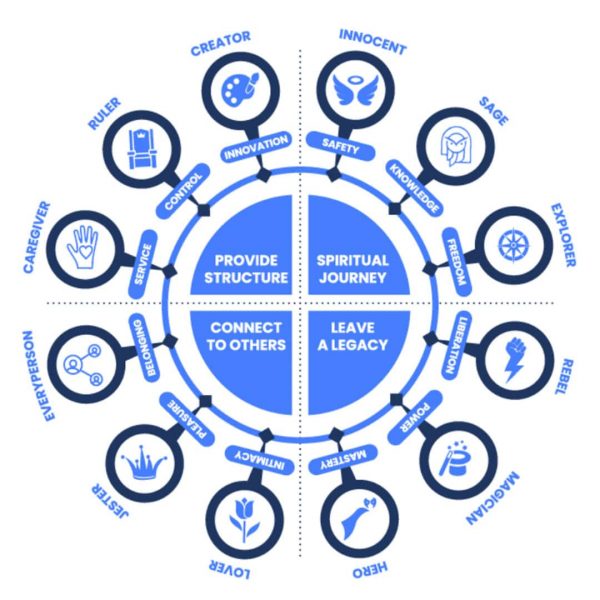
Jungian Archetypes

Jungian archetypes are universal, mythic characters or personas that embody specific traits, behaviors, and values. They are deeply rooted in the human psyche and can be used to create powerful emotional connections with consumers. The “Hero” archetype, for example, represents courage, strength, and the ability to overcome obstacles, while the “Sage” archetype represents wisdom, knowledge, and guidance. 

Incorporating these archetypes into branding and messaging can enable companies to tap into the deep psychological needs and desires of their target audience. Numerous studies and scholarly articles support the effectiveness of utilizing archetypes in branding. 

For example, Jennifer Aaker1, a marketing professor at Stanford University, found that brands with strong personality traits are more likely to be perceived as authentic and trustworthy by consumers. Similarly, David A. Aaker and Erich Joachimsthaler2 found that brands that successfully utilize archetypes have a significant competitive advantage over those that do not.

Building on Jung’s organized analytical system, it can be helpful to view brands through the lens of the 12 different personality archetypes, and how those can apply to generating authentic emotional resonance with a particular audience. 

In a series of articles in coming months, we will look at each of these 12 archetypes, and potentially help you see and understand your own brand in a new light.

Done well, a brand is a cohesive experience that customers witness and feel whenever they interact with its products or services.

So what does this mean for your brand?

As much as we would like to believe that all of our choices and decisions are fully conscious, intentional, most often we are driven by our subconscious. In his book about the subconscious mind of the consumer, Professor Gerald Zaltman pointed out that 95% of all cognition happens in the unconscious mind. We can use the work of Jung and Zaltman, among others, to categorize brands in a way that helps ensure the relatability and unconscious appeal is aligned with the organization, its offerings, and the audience who would most benefit. 

These are just a few teasers to get you thinking… 

The Magician

The Walt Disney brand exists and endeavors to wow their audience with new and exciting experiences, while also fulfilling their dreams. It enjoys taking fans on a mysterious journey, and providing them with memorable, magical moments. 

The Lover 

Chanel is about passionate feelings of intimacy and sensual pleasure—think fine leathers and exotic scents—that drive affinity and loyalty for Chanel. 

Brands can also use archetypes to differentiate themselves from competitors. By selecting an archetype that is unique in their industry, a brand can stand out and create a distinct identity in the minds of consumers. For example, a financial services company that aligns with the “Magician” archetype may differentiate itself from competitors by emphasizing its ability to bring financial success and prosperity to its clients. Over all, incorporating archetypes into branding can be a powerful tool for building stronger connections with consumers and achieving long-term success.

In a global culture where we each have billions of options to choose from—with so many brands wanting our attention—it is essential to know and clearly understand your brand’s personality. This is just one necessary component of thoughtful, authentic brand identity and positioning. If your brand strategy is not shaped by this kind of thinking, it’s time to take a fresh look.

This is about purpose, intention, and resonance. We know of no better way to grow your audience, and your business, and we love this stuff. 

Stay tuned for more on this, coming soon…


References:

1 Aaker, J. L. (1997). Dimensions of brand personality. Journal of Marketing Research, 34(3), 347-356.

2 Aaker, D. A., & Joachimsthaler, E. (2000). The brand relationship spectrum: The key to the brand architecture challenge. California Management Review, 42(4), 8-2

Settling for ‘good enough’ with your startup branding? It’s limiting your growth.

You know what it takes to start a business. You understand the ins and outs of financial management, and how to keep your startup afloat. But are you settling for less when it comes to your startup branding? 

As your business grows and becomes more successful, it’s essential to continually shore up your company’s branding efforts. But this is often the last thing on an entrepreneur’s mind. Don’t let the fear of ‘boxing yourself in’ stop you from making important branding decisions, no matter where you are in your evolution.

Here at ChrisRubinCreativ (CRC), we specialize in alleviating the branding burden associated with growing your business. As an easy example, gaining clarity on your strengths, USPs, and differentiators—via the Brand Identity deck—can help you distinguish yourself from the competition, and build affinity with your specific target audience.

Poor Branding Means Stunted Growth

Bland & Generic: Lack of Emotional Resonance

We all have our favorite products—our preferred shoe brand, the only kind of cereal we eat, or allegiance to one device over another. The primary reason we identify with these products is a result of their unique brand identity and messaging. Mercedes Benz and BMW both sell cars, but the feelings we associate with each brand are different, each speaking to different needs and desires—prestige and luxury for Mercedes, engineering expertise and precision for BMW.

With an authentic brand identity—and emotionally resonant communication in place—customers will be able to make a more educated choice about their preferences, in line with their values and priorities. Ultimately, this connection is about how you make them feel.

Lost in the Crowd

Poor Differentiation: Getting Lost in the Crowd

Most markets are saturated. We all know and feel that, every day. There are often hundreds, if not thousands of different options for everything. From wedding planners to ice cream stores, the choices are endless.

Effective branding helps your product or service establish a powerful emotional connection with your potential customer—and this is crucial, because numerous studies (such as this one by Harvard Business Review) have shown that emotions drive purchase decisions, even in B2B transactions. When customers can easily differentiate your company—via effective branding—you set yourself apart from your competitors.

Missing the Mark: Unclear Communication

If your customers are confused about what your company does, or most importantly, what you can do for them, they’ll go with another option. “Good enough” is not, actually.

With clear and thoughtful messaging, and targeted brand strategy, your customer base can grow exponentially.

Brand+Psychology

CRC Can Help

For many small to medium-sized businesses, effective branding strategies can seem out of reach. At CRC, we have efficient and effective solutions designed to help solve the problems created by poor branding. For us, it’s all about ROI. The investment made in thoughtful branding due diligence pays dividends for years to come, in the form of increased engagement, conversions, sales, and loyalty.

Let us help you grow the way you know you can. 

Our in-depth branding process—which includes a thorough Brand Playbook, a Competitive Marketplace Assessment, a detailed Target Audience Persona study, and emotionally-resonant messaging—can help you better understand your customers, and vice versa. 

Don’t shortchange your growth. Let’s talk branding and strategy. Let’s talk about growing your business. 

Reach out to us today at info@chrisrubincreativ.com… We’d love to learn more about your situation, and where you want to grow.

Power Players: Top Branding Agencies Defining the Future of Branding

Top Branding Agencies

In today’s highly competitive marketplace, building a strong and recognizable brand is crucial for the success of any business. A well-crafted brand not only sets a company apart from its competitors, but also resonates with its target audience, establishing trust and loyalty. However, developing and nurturing a brand requires expertise, creativity, and a deep understanding of the market. This is where top branding agencies come into play. In this article, we will explore the power players in the branding industry, showcasing their significance in defining the future of branding.

The Importance of Branding Agencies

Branding agencies play a pivotal role in helping businesses develop and shape their brand identity. They collaborate closely with their clients to understand their values, goals, and target audience. Leveraging their expertise in design, marketing, and consumer behavior, these agencies create comprehensive branding strategies that encompass every aspect of a company’s visual and verbal communication.

By working with a top branding agency, businesses can benefit from the following advantages:

1. Professional Expertise: Top branding agencies have teams of professionals with diverse skill sets, including designers, marketers, strategists, and copywriters. This collective expertise ensures that every aspect of the brand—from the logo and website design to the messaging and marketing campaigns—is well-crafted, and aligned with the company’s objectives.

2. Market Insight: Branding agencies have a deep understanding of market trends, consumer behavior, and competitor analysis. They leverage this knowledge to develop brand strategies that are not only unique but also resonate with the target audience. By staying updated with industry changes and evolving consumer preferences, these agencies ensure that brands remain relevant and competitive in a dynamic market.

3. Creativity and Innovation: Creativity lies at the core of effective branding. Top branding agencies bring fresh perspectives and innovative ideas to the table, helping businesses stand out from the crowd. They push boundaries, experiment with design elements, and create memorable experiences that leave a lasting impression in consumers’ hearts and minds.

4. Consistency and Coherence: A strong brand requires consistency across all touchpoints. Branding agencies meticulously define brand guidelines that encompass elements like vision, mission, purpose, core narrative, tone, and voice. By maintaining consistency in brand image and communications, businesses build trust, and reinforce their unique identity and positioning in the minds of consumers.

5. Return on Investment (ROI): Partnering with a top branding agency is an investment that yields long-term benefits. A well-crafted brand identity can increase brand recognition, customer loyalty, and overall revenue. Effective branding strategies position businesses as market leaders and give them a competitive edge, resulting in higher conversion rates and better business performance.

Frequently Asked Questions (FAQ)

How do top branding agencies identify and understand a company's target audience?

Top branding agencies conduct in-depth market research, including surveys, focus groups, and data analysis, to gain insights into the target audience’s demographics, preferences, and behaviors. This information helps them create brand strategies that effectively connect with the intended consumers.

Can small businesses benefit from working with top branding agencies?

Absolutely! While top branding agencies often work with larger corporations, some also cater to small and medium-sized businesses. These agencies understand the unique challenges faced by smaller enterprises, and can tailor brand strategies accordingly. Investing in branding early on can help small businesses establish a strong foundation with longevity, and gain a competitive advantage.

How long does the branding process take?

The duration of the branding process varies depending on the complexity of the project and the specific requirements of the client. On average, the branding process can take several weeks to a few months. It involves multiple stages, including discovery and research, strategy development, creative conceptualization, and refinement.

Can branding agencies help with rebranding efforts?

Yes, top branding agencies often specialize in rebranding initiatives. Whether a company is undergoing a strategic shift, experiencing a merger or acquisition, or simply wants to refresh its brand identity, branding agencies have the expertise to guide the rebranding process effectively and efficiently. It is often the case that an external partner agency can deliver on a successful rebranding initiative far more cost effectively than internally-generated approaches. They ensure that the new brand aligns with the company’s vision, and resonates with its target audience, while bringing vital fresh perspective and insight.

Conclusion

In a rapidly evolving business landscape, where consumer choices are abundant, building a strong brand is essential for long-term success. Top branding agencies serve as invaluable partners in this endeavor. They bring together expertise, creativity, and market insights to craft brand identities that make businesses stand out, resonate with consumers, and drive growth. By collaborating with these power players, companies can unlock the potential of their brands, and shape a promising future in the ever-changing competitive marketplace.

Building a Powerful Brand Strategy

Brand Marketing, Better Brand Strategy

1. Know yourself (Knowledge)

2. Live/be true to yourself (Authenticity)
3. Embody integrity (Consistency)

Your entire brand strategy boils down to a version of those 3 steps. Neglect one, and your brand risks becoming just another face in the crowd.

But focus on this simple framework, and you’ll have your best shot at driving more customer conversions, engagement, and brand loyalty.

Sound exciting? We think so, and it’s pretty simple too.

Knowledge: Know Thyself

If you’ve ever tried to improve yourself (think: fitness, education, etc.), you know it all starts with self-awareness. Addressing one of life’s most pressing questions: Who are you, really

Answering this requires identifying and understanding the unique combination of factors that make you, ‘you’.

What do you want?

What do you need?

What are your strengths, and shortcomings?

What are your core values, and beliefs?

What about philosophy, and mindset?

Fears?

Motivations?

As a hiring manager might put it, “What sets YOU apart from all the others?”

Better Brand Strategy

Lacking this clear self-awareness and understanding, you’re left wandering, adrift. Unfocused, without a sturdy foundation of identity on which to build your future. 

In a world where customers have developed a hyper-sensitive radar for bullshit and puffery, this bedrock of identity is more necessary than ever before.

Potential buyers and clients need to feel like they truly know your brand—and believe in it—before they invest their trust, attention, and money. They want to know, ‘What is your brand all about?’ and businesses who fail to provide a clear, compelling, and well-differentiated answer get lost, and left behind. On to the next, says the savvy shopper.

“Makes sense, but how do I do this?”

To truly know your brand, the first step would be a brand discovery exercise (ideally, with the help of a branding expert). This will help you identify your USP’s, your true value proposition, the end-benefit to consumers, and who exactly those consumers are. Getting an experienced branding strategist on board will help you avoid some of these common branding pitfalls:

 What you sell

vs. who you are

Many brands assume that ‘what they do’ or what they offer (rational benefits of their brand) is equal to ‘who they are’ (their brand identity). Not true.

To illustrate, if you make shoes, what sets you apart from the competition isn’t just cool footwear—No matter how many celebrities endorse it, or how many jugs of holy water it contains. Instead, it’s everything that goes into creating and defining the end result; including your values, your approach, your process, your team, and more.


Jumping on the 
'brand-wagon'

Many brands internalize an identity they believe will serve them best. Often unknowingly, but sometimes on purpose (think: spammers, copycats, etc.). They do this by appropriating popular values and/or cultural themes that reflect the current environment, or sound good on paper.

For example, a brand may think of itself as cutting edge and innovative, while in reality it’s more established and traditional. Picture a chocolatier following a recipe handed down through generations. They may feel like a flashy image is the only way to compete, but attributes of tradition and experience may in fact be their true USP, and the reason why customers return.

Once you have captured and crystallized your brand’s identity (we call this your Foundational Messaging Brief) you can move on to the next building block of success—authenticity.

 Authenticity: Live true to who you are

For a truly fulfilling life, we aim for total synchronicity between our truest self, our words, and our actions. Congruence between inside and out; inward and outward, acting in concert.

Think about it… Who do you trust? Who do you support, and love, even? It’s the people whose actions and behavior align with their words. It’s the authenticity that we can sense and feel in our bones: When it’s there, we know it. And a faker? They reek. Right?

Better Brand Strategy

And so, if you claim to be a vegan influencer, and you’re caught chowing flesh, you’ll have some serious explaining (and apologizing) to do, and a lot of trust to rebuild. Remember: Image is not identity, and identity only serves if it’s true and authentic.

What’s true for people goes for brands, too: consumers only trust brands that live up to their promises, and do what they say. Today’s discerning consumer has a low tolerance for hypocrisy, and here’s more proof: According to this survey, 86% of people say that authenticity is important while deciding what brands they will like and support.

“So how can I create a truly authentic brand?”

Assuming you’ve already completed step one (knowing yourself: brand identity), here are a few tips to consider:

  • Ensure alignment across identity and action:
    Make sure your business objectives, marketing strategies, and branding and messaging across channels all align with your brand identity. Remember to examine and update both your verbal and visual language.

  • Check in with customers, often:
    Conduct surveys and feedback sessions to ensure consistency between who you really are, how you’re portraying your brand, and how customers are experiencing it.

  • Own your mistakes:
    Everyone messes up, but consumers are quick to forgive brands that accept their mistake and make amends. In short, don’t fly into controversy like United Airlines, crashing $800 million in value.


  • Remember, every trend is not your friend:
    Often in a hurry to be part of the latest viral conversation, brands stray away from their core identity… Remember how we spoke about jumping on the ‘brand-wagon’, without a clear understanding of self? Be sure to evaluate trends carefully, and make sure they are a meaningful extension of your brand, if you do decide to get onboard.


  • Infuse purpose-driven branding with authenticity:
    Your brand should be driven by a purpose larger than the self. But this too must be shot through with authenticity. Successful businesses join hands with customers to fulfill shared missions and goals, but with full transparency and good faith.

Consistency: The snowball effect

You’ve taken a close look within, chipping away to reveal your true self. You’re living true to this authentic identity… What next? 

How do you build on this hard work to drive further growth, and success?

Aristotle offered invaluable advice when he said,

 
In other words: Success comes with consistency. 

Consistency is key to creating a positive snowball effect: Small steps taken each day, like building blocks toward the larger goal. Aligned with our values and goals, these steps reinforce our identity, amplify our strengths, and convey our integrity.

Better Brand Strategy
 The easiest examples of consistent actions bearing huge success are sporting achievements. Speaking about Olympian Michael Phelps, his coach, Bob Bowman, said this:


Consistency, then, is the third crucial pillar of success, and growth: in life, in sports, and in business.


Three Tips To Ensuring Consistency 

  • Develop brand guidelines

    This will ensure consistent verbal and visual messaging across platforms, across departments, and across time

  • Enforce a robust system of checks and approvals
    Consider having a Standard Operating Procedure (SOP) to make sure every piece of communication is in line with your brand personality, values, and tone, before it goes live. Checklists are great for this purpose

  • Conduct regular ‘brand refresher sessions’ for your team
    Your people must represent the essence your brand—ensure they are aligned to your brand values and mission, and are always speaking the same language.

While building your brand strategy, think of your brand values, strengths, and mission as muscles—flexing them consistently, authentically, makes them stronger, reinforcing them in the minds of your audience; your buyers, and clients. Continued alignment between who you say you are and what you do, will—over time—prove and establish you as an accountable, trustworthy brand in the eyes of the marketplace. Integrity wins the day.

“Sounds right to me, but how can I do this?”

Bottom line: If you want to build a powerful brand strategy that engages customers, drives sales, and ensures brand loyalty, try this KAC framework.

We know it works—we’ve developed and applied it over the last few decades, helping countless clients develop memorable, successful brands. 

Keen to learn more? We’re just a click away!

And if you’re not quite sure what kind of help you might need, try this 20-second questionnaire.

1 Actually, this is a  helpful translation of Aristotelian thought by the author Will Durant, but the sentiment remains accurate, and useful.